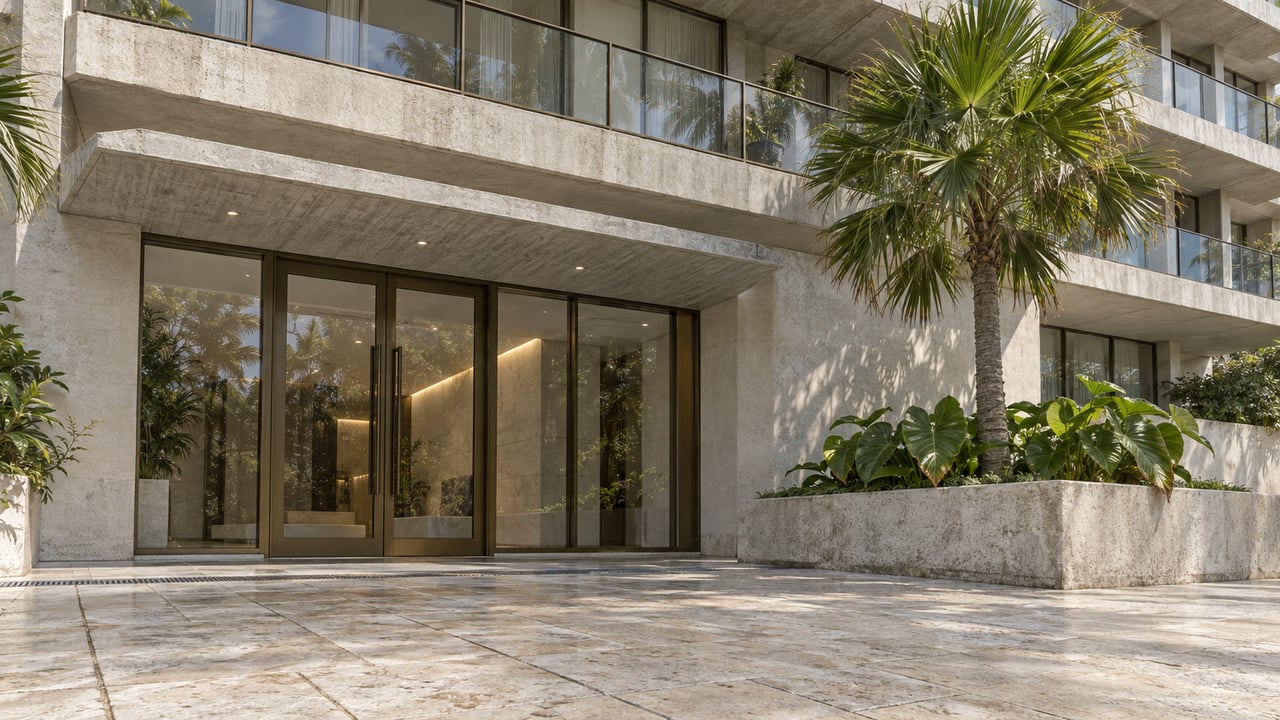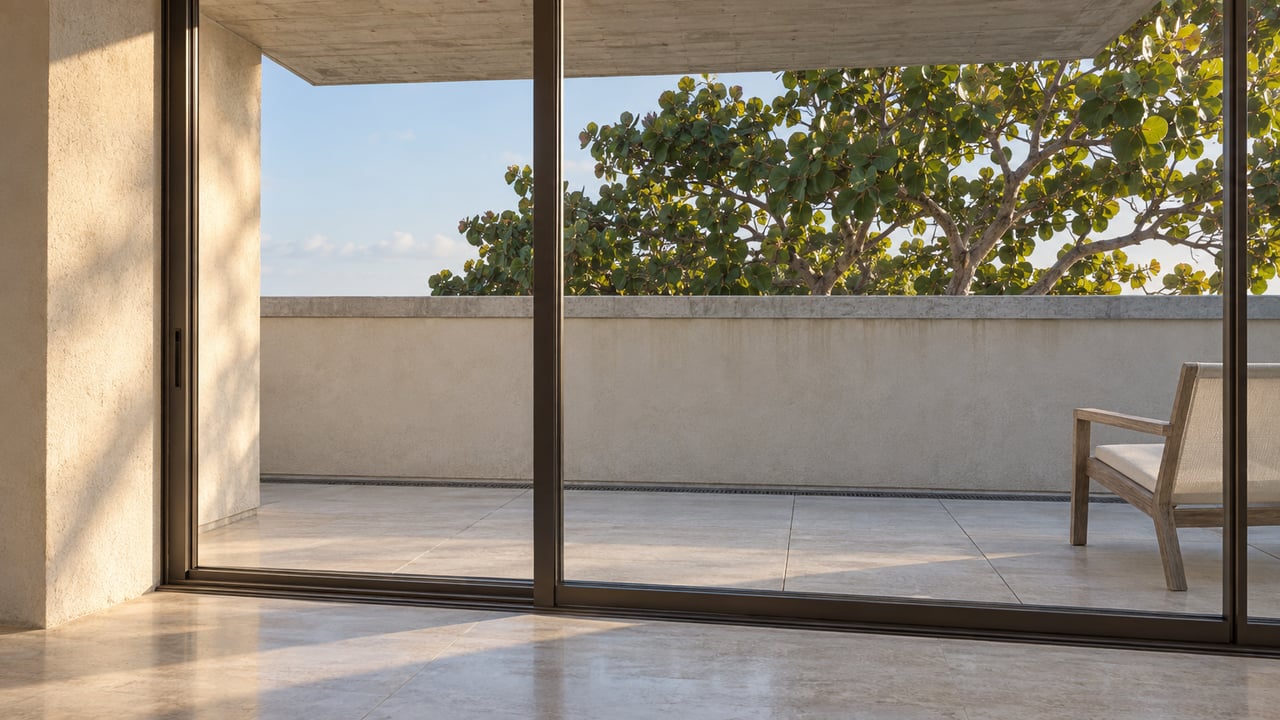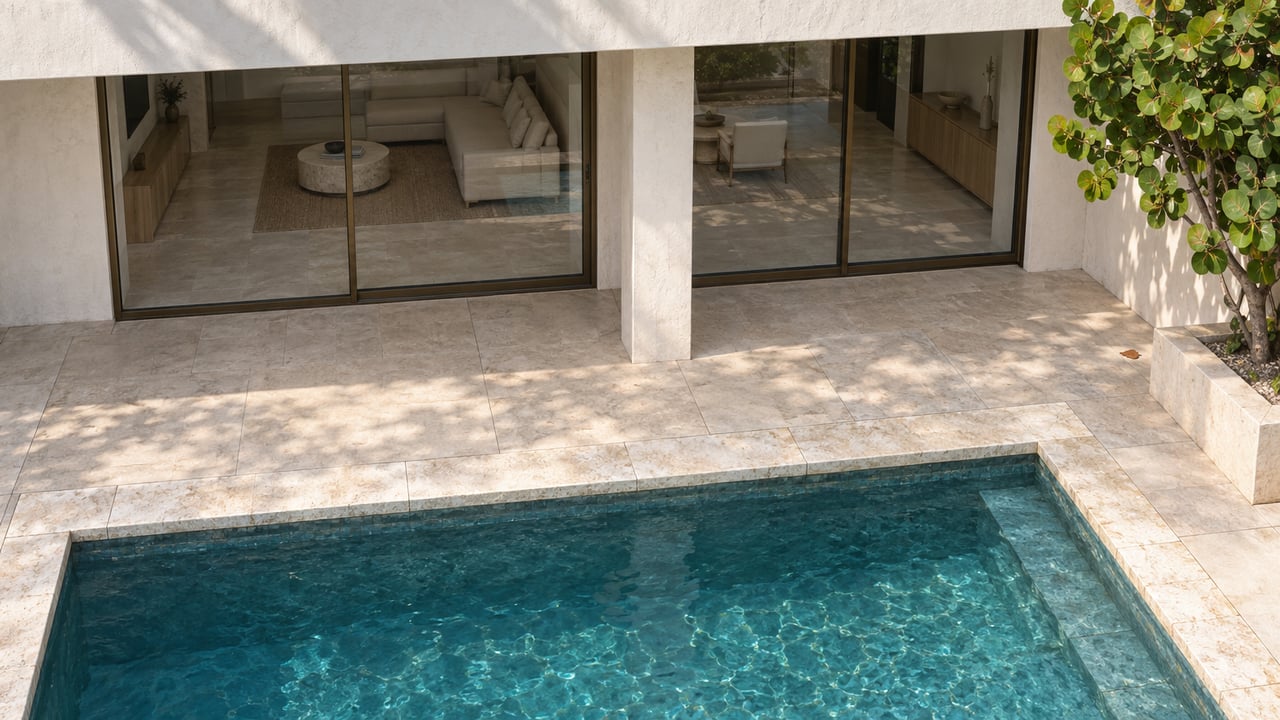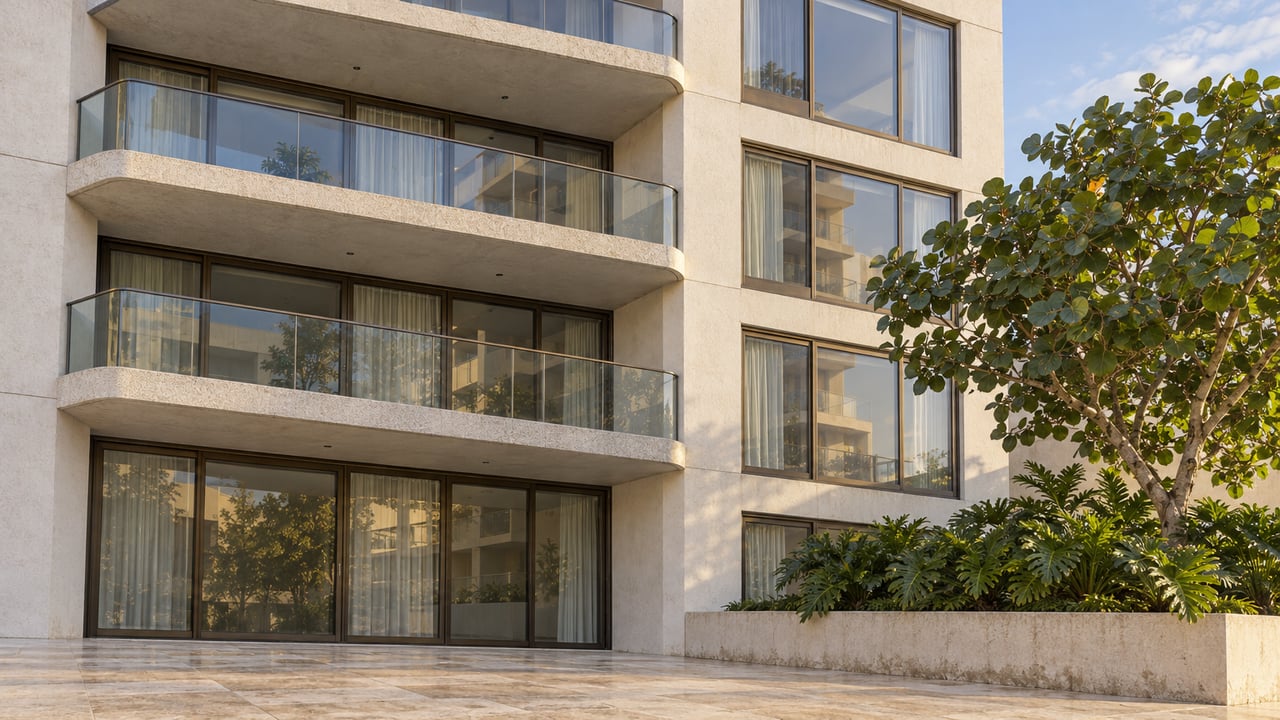
"Banks today don't finance even 50 percent," Gabriel Jiménez, co-founder of RioBlanco Capital, told Caribbean Business in early October. He was explaining how his firm is paying for The Legacy, a 44-unit tower planned for Luis Vigoreaux Avenue between Garden Hills and San Patricio. Local banks cover roughly half the cost. The rest comes from RioBlanco's own equity and the deposits buyers put down.
With that structure, a buyer's deposit on a $1.2 million unit is part of the capital that gets the building built. In Puerto Rico, the deposit rules a project operates under decide whether that money stays in a locked escrow account until closing or can be spent on construction before the building exists.
What the Price Sheet Shows
Seen as a product, The Legacy is easy to sum up. News is my Business reported the $45 million, seven-story project on September 15, 2026. The developer says the Garden Hills and San Patricio area has seen no new residential construction in more than 25 years.
| Two-bedroom residences | Penthouses | |
|---|---|---|
| Floors | 2 through 6 | 7 |
| Total area | 1,467 sq ft | 2,934 sq ft |
| Bathrooms | 2.5 | 3.5 |
| Parking | 2 spaces | 3 spaces |
| Starting price | $1.2 million | $2.95 million |
Jota Arkitekts designed the building. RBJC Development LLC handles sales and marketing. The project has approval from the Puerto Rico Department of Consumer Affairs, known as DACO. Each unit gets an EV charger at one assigned space, and the building will have a backup generator and a water cistern. Jiménez told Caribbean Business that pricing stays below $1,000 per square foot, a level the firm sees as essential for knowledgeable buyers. As of that October 7 report, more than 40% of the units had sold in pre-sales.
The pre-sale and the financing are connected. Those early buyers are paying for units, and their deposits are also part of the money funding construction.
Why Guaynabo Buyers Are Putting Money Down Years Ahead
Pre-selling a building years before delivery only works when buyers have nowhere else to go. In established Guaynabo, they mostly haven't. RioBlanco says it built The Legacy partly for families who wanted to stay near the neighborhoods where they lived or grew up but had to look elsewhere for new construction.
Jiménez's description of the buyer pool fits that. In the same Caribbean Business interview, he said every buyer so far is Puerto Rican. Many already live in Guaynabo, Beverly Hills, Torrimar and Villa Caparra and want to trade a house for something easier to maintain. Others are Puerto Ricans living abroad who plan to come back in 2029, when the project is finished. "A lot of them are doctors," he said.
The scarcity extends across the island. In September 2026, Caribbean Business reported developer Rafael Rojo's estimate that Puerto Rico has built fewer than 1,000 housing units a year for five years. Weeks later, Puerto Rico Builders Association president Pinsy Rivera Ortiz described a shortage of more than 5,000 homes. She said a 92-home project she had listed drew 2,553 inquiries.
Thin supply pushes buyers to commit early, and with banks lending less than half the cost, developers need that early money. RioBlanco says it uses the same mix of equity, bank debt and buyer deposits at The Icon in Condado and The Grove in Ocean Park. So the question for a Guaynabo buyer goes beyond whether they want the unit. They also need to know the rules for their money between signing and closing.
One Deposit, Two Sets of Rules
Puerto Rico has two frameworks for new-home deposits, and a luxury project can fall under either one.
The older framework is Law 130 of 1967 and DACO's Regulation 2268, in effect since September 1977. The newer one is Law 101 of 2025, the "Ley Para la Promoción de Residencias de Alto Impacto Económico," signed August 1, 2025. Law 101 covers new homes whose first-sale price is above the FHA limit for their municipality. A developer opts in by notifying DACO within 30 days of filing for a construction permit. Projects that don't opt in stay under Law 130 and its regulations.
The price threshold is low compared with this market. El Nuevo Día reported that Puerto Rico's 2026 municipal FHA limits run from $541,287 to $690,000. A $1.2 million unit is above the highest of those limits. Every new Guaynabo unit at that price could qualify for Law 101 if its developer chooses it. Public announcements about The Legacy do not say which framework it uses. The buyer has to ask.
Here is how the two frameworks treat the same deposit:
| Regulation 2268 / Law 130 | Law 101-2025 | |
|---|---|---|
| Where the deposit goes | Separate escrow account for the project at an authorized Puerto Rico bank or savings institution | Special deposit account at a Puerto Rico bank or savings institution, kept apart from operating funds |
| Deadline to deposit | Within 10 business days | Within 10 business days |
| Can the developer spend it? | No. The account cannot be drawn on. | Yes, on project development costs only, after posting a bond with DACO in an amount DACO sets |
| Money taken before approvals | Barred before preliminary approvals, except a nominal $25 market-testing payment | Taking reservation deposits before required planning approvals is an "undesirable practice" |
| Refund protection in the statute | Caps what a seller can keep when a buyer defaults: $50 on an option, 2% of the price on a purchase contract | Refundable despite contract terms if DACO or a court finds an undesirable practice, fraud or intentional deception |
| Construction-defect coverage | 2% bond or insurance at deed signing, which DACO can raise to 10% | Bond or insurance of up to 10% of the sale price |
The main difference is in the third row. Article 7 of Law 101 starts out like the old rule. The deposit is held separately and the account cannot be drawn on, so the money can go back to the buyer or be credited at closing. Then a "no obstante" clause lets the developer use those funds for project development costs once it has posted a bond with DACO. The statute does not set the bond amount. DACO decides it project by project. Separately, DACO can require a fidelity bond on escrowed money before it issues a developer's special license, if it considers one necessary to protect buyers.
Under Law 101, then, a deposit can work as construction capital, protected by a bond whose size is set case by case. That is the role Jiménez described when he said deposits make up part of the non-bank half of the financing.
A Law in Effect, Still Without Its Rulebook
Law 101 says it takes effect immediately. It also gave DACO and the Department of Economic Development and Commerce, known as DDEC, 60 days to issue whatever regulations or administrative orders it needs. El Nuevo Día reported on May 15, 2026, about nine months after signing, that the implementing rules still had not been filed. DACO Secretary Hiram Torres Montalvo said the agency was preparing an administrative order with DDEC instead of a regulation. In the meantime, DACO was approving qualifying projects quickly but individually, so construction would not stall.
This matters for buyers. As of that report, there was no published, general standard for how large a Law 101 bond should be or how DACO would oversee spending from the special accounts. Each approval was its own decision. For a buyer, the details of a specific project's DACO approval matter more than general descriptions of the law.
What to Get in Writing Before the Reservation Check Clears
The Legacy's buyers are mostly local and buying for the long term. The same questions apply to any new tower in Garden Hills, San Patricio or elsewhere in Guaynabo that opens for reservations above the FHA limit:
- Which framework applies? Ask whether the developer opted into Law 101 or the project is under Law 130 and Regulation 2268, and ask to see the document that shows it.
- Which bank holds the deposit, and under what agreement? Law 101 requires a special deposit-account contract with a Puerto Rico institution to be signed before any reservation or purchase contract.
- Has a DACO bond been posted, and for how much? If the developer plans to spend deposits, the bond is what stands behind that money.
- What approvals did the project have when deposits were first accepted? Both frameworks restrict taking deposits before certain planning approvals.
- How does the contract handle a default by either side? Regulation 2268 caps what a seller can keep. Law 101's refund protection depends on DACO or a court finding misconduct.
- What is the realistic delivery timeline? The Legacy's diaspora buyers are planning around a 2029 completion. For comparison, El Nuevo Día's May table of FirstBank-financed projects listed RioBlanco's The Icon in Condado at 82% complete, and Caribbean Business reported in October that The Icon would begin delivering units at the end of 2026.
This is general information about published rules, not legal, tax or financial advice. Before signing, have your own attorney review your reservation contract, the deposit-account agreement and the project's DACO approvals.
FAQ
Does Law 101 apply to resale condos in Guaynabo? No. It covers newly built homes on their first sale above the municipal FHA limit, and only when the developer opts in.
If my deposit is spent on construction, is it gone? It is still credited to the purchase price at closing. Under Law 101, spending is limited to project development costs and is allowed only after the developer posts a DACO bond. The statute also makes deposits refundable, whatever the contract says, if DACO or a court finds fraud or an undesirable practice.
Has DACO issued the Law 101 administrative order? In the most recent public reporting, El Nuevo Día's May 15, 2026 article, it had not, and DACO was reviewing projects one at a time.
Nick Pastrana is both a broker and an attorney, and the team at Aire Real Estate reviews the reservation contract, the deposit-account agreement and the DACO approvals before a client signs. If you're weighing a reservation at a new Guaynabo tower, let's connect and go through the deposit terms together.