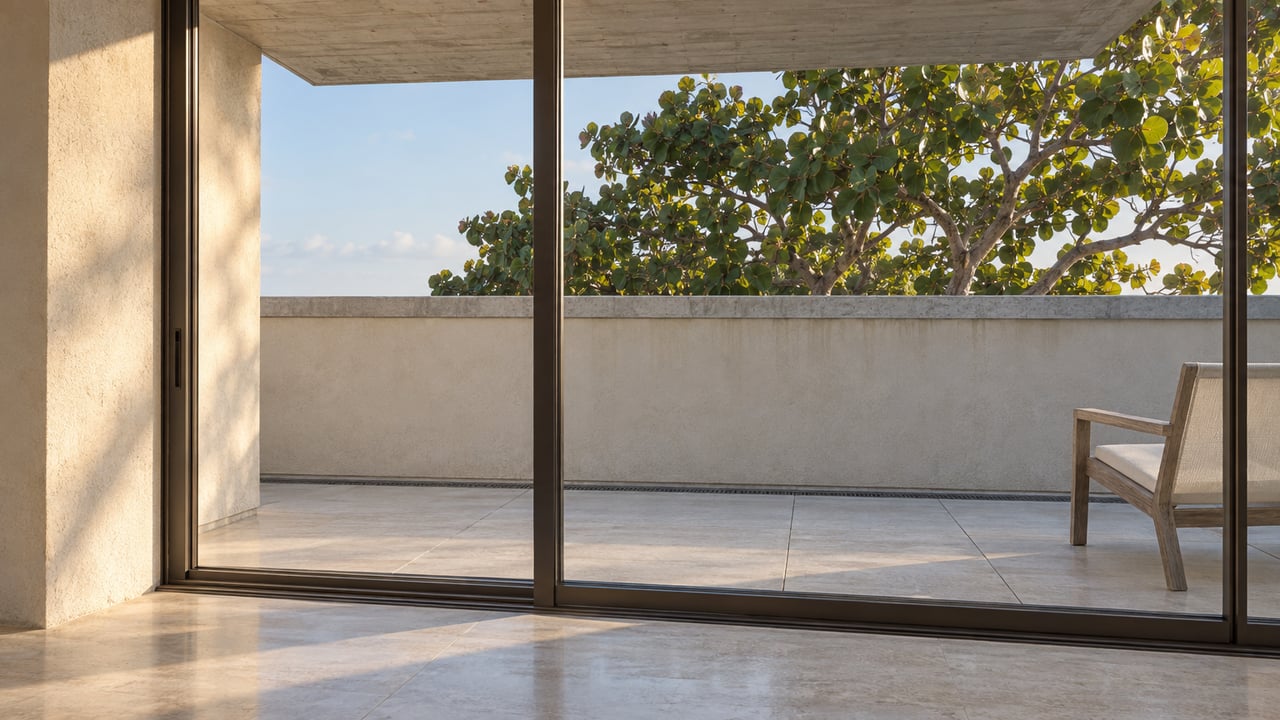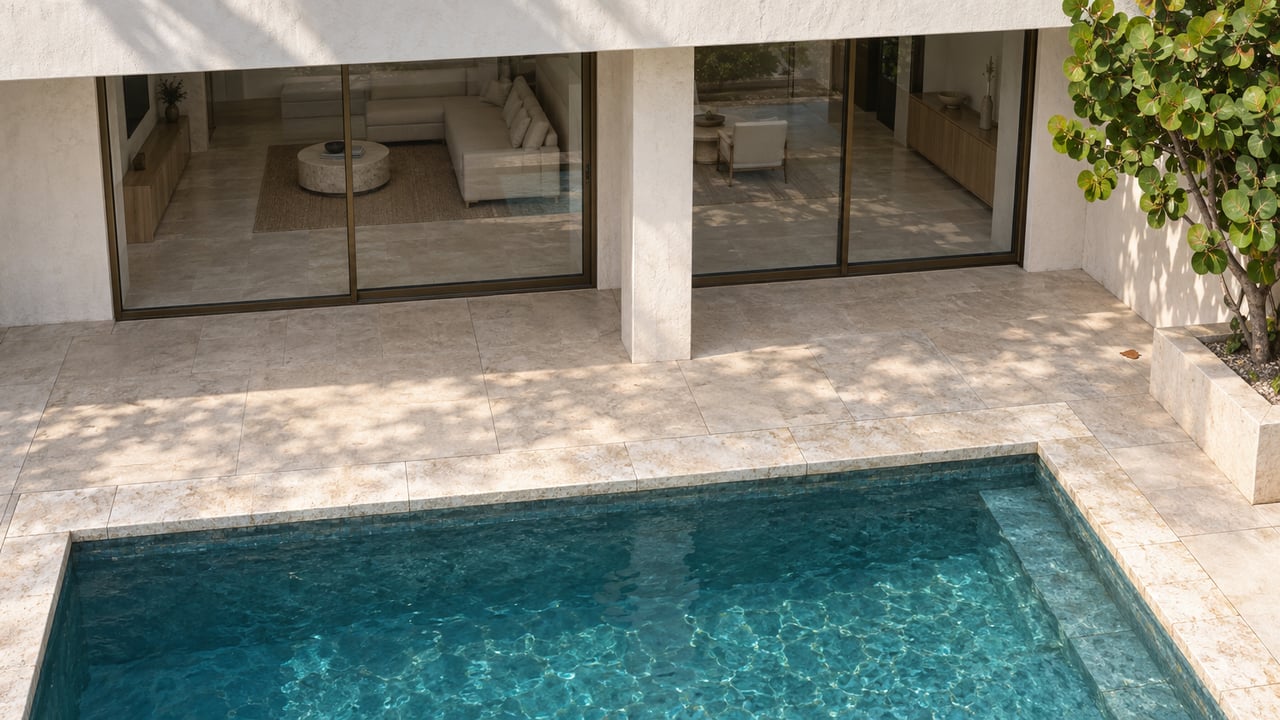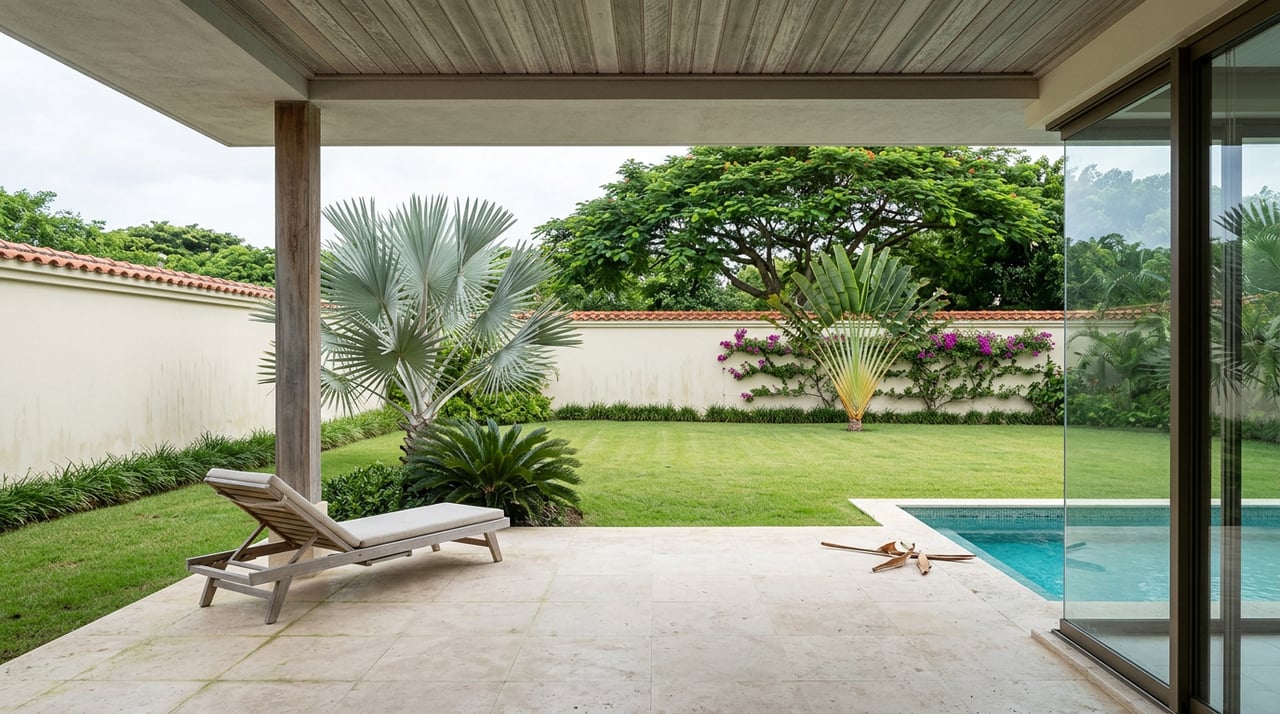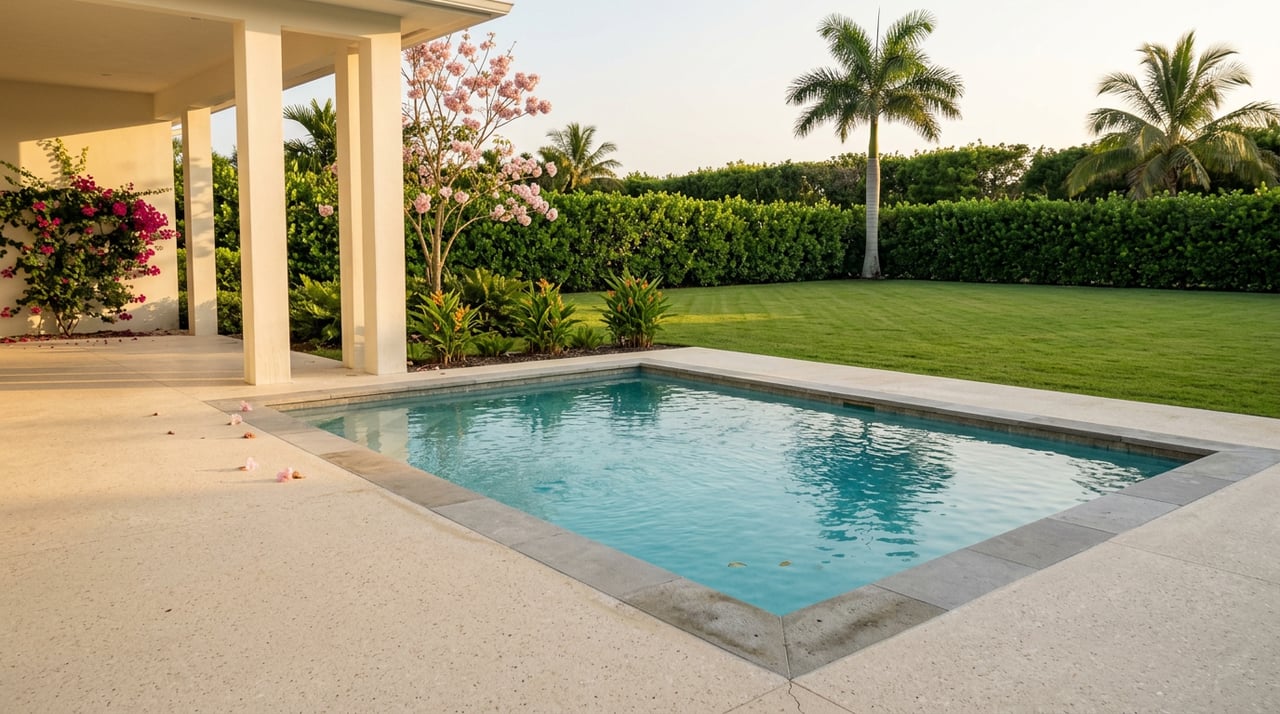
A short-term rental listing in Palmas del Mar reads well on paper. Golf access. Marina views. A members-only beach club a short golf cart ride from the front door. Then a guest books a five-month stay, and the reservation confirmation includes a line restricting beach club access to owners and qualifying long-term residents. The listing photos showed the beach club. The lease terms quietly did not include it.
That gap comes straight from the Palmas Homeowners Association's own bylaws, which draw a line between what they call Common Properties and Restricted Common Properties. Tenants on leases shorter than six months, along with resort-style paying guests, don't get automatic privileges to certain restricted amenities, the beach club among them. For an owner living in the home, this distinction barely registers. For an investor pricing a short-term rental against the amenities in the marketing photos, it is arguably a more useful number than anything on a portal's median-price chart, because it sets a hard ceiling on what a unit can honestly advertise and, by extension, what it can charge.
Three Layers, One Bill
Before amenity access even enters the picture, the ownership cost itself comes in more layers than a single "HOA fee" line suggests.
The master due, paid to the Palmas Homeowners Association itself, is public and specific. According to the association's own new-owner materials, the current annual assessment is $1,300 per residential unit and $1,040 per lot, prorated at closing. The 2026 approved budget holds that figure flat with no increase, and it projects $5.61 million in revenue against $4.99 million in operating expenses, leaving $618,269 set aside for major repairs and disaster recovery.
That $1,300 a year works out to roughly $108 a month, which is a meaningfully smaller number than the "$200 to $400 a month in PHA fees" language that shows up in a fair amount of marketing copy. The difference is usually a second, separate charge: the neighborhood or condo regime fee, typically running somewhere between $100 and $300 a month depending on the specific building or gated section, covering things like pool upkeep and neighborhood-specific landscaping. When a listing quotes one blended monthly HOA number, it is worth asking whether that figure is the PHA due, the regime fee, or both combined, since the two are billed separately and set by different boards.
A third layer is fully optional but easy to assume is included: membership in the Palmas Athletic Club, which operates the golf courses, tennis center, and the beach club itself. The club's published dues run in tiers by age: $157.30 a month for members under 30, $235.95 a month for members under 35, and $350.90 a month for full membership at 35 and older. Some membership packages also carry a nonrefundable initiation fee, with corporate-style tiers ranging from $5,000 to $15,000. None of this is required to own property in Palmas del Mar. It is required if the lifestyle a buyer is picturing, golf in the morning and the beach club in the afternoon, is actually part of the plan.
Why Three Portals Show Three Different Medians
Anyone who has compared listing sites for Palmas del Mar has likely noticed the median price seems to depend on which site they're reading. One source puts the median home value at $463,000. A 2026 market analysis from a relocation-focused brokerage puts the median closer to $580,000, up 5.8% year over year. A luxury affiliate's materials cite a median listing price of $749,000.
None of these numbers is wrong. They're measuring different slices of a community spread across 32 distinct neighborhoods, where inventory ranges from golf-course condos starting in the $300,000s to beachfront estates and hillside villas that regularly clear $2 to $3 million. Active listings currently span roughly $410,000 to $8.5 million across the community. Whichever segment happens to dominate a given data pull, golf-condo heavy or beachfront heavy, moves the median without the underlying market actually shifting that much. A single median price for Palmas del Mar tells you less about what you'll pay than which of the 32 neighborhoods you're actually comparing.
The Yield Math That Actually Matters
For an investor, the purchase price does more work in the yield calculation than most buyers expect, and not in the direction a rising median would suggest.
Using an estimated $39,000 to $40,000 in median annual host revenue from one short-term rental data provider, a $300,000 purchase implies a cap rate near 4.1%. The same revenue figure against a $400,000 purchase implies something closer to 3.1%. Because the revenue ceiling is fairly fixed by what the market will actually pay per night, a higher purchase price doesn't buy a proportionally higher return. It buys a lower one.
Occupancy and rate estimates vary depending on the data source, which is worth flagging rather than smoothing over. A municipal-level snapshot for Humacao puts occupancy around 55%, with an average nightly rate near $238. A Palmas-specific snapshot puts occupancy closer to 46% to 47%, with a higher average rate near $291. The two don't agree on the exact numbers, but they agree on the shape: a calendar that's well short of fully booked, offset by rates that sit above the broader municipal average because of the amenity access baked into the Palmas name.
That gap between rate and occupancy is exactly where the break-even math gets uncomfortable. One worked example for a $600,000 two-bedroom unit needed about $77,000 in gross rental revenue to break even at a $300 nightly rate, which implies roughly 70% occupancy. That's well above what either data provider reports as the market average. The distance between what a financed purchase needs to cash flow and what the market typically delivers is the real underwriting question, and it's one no published median price will ever surface.
What's Actually Changing This Year
Town Center Palmas, a roughly $24 million, 60,000-square-foot mixed-use project bringing retail, restaurants, offices, a grocery store, a pharmacy, and medical space into the community, has a completion timeline pointing to 2026. For long-term value, this kind of amenity build-out is the sort of thing that can eventually support pricing. For a rental pro forma written today, it isn't open yet and shouldn't be counted as current foot traffic or current rental demand until it actually is.
On the regulatory side, Humacao has not adopted a separate short-term rental licensing regime the way some other Puerto Rico municipalities have. Operators generally work through the standard Puerto Rico Tourism Company registration process and the 7% room occupancy tax that applies to stays under 90 days. Municipal rules can change, and deed restrictions inside specific Palmas neighborhoods can be stricter than whatever the municipality allows, so confirming current status with both the municipality and the specific HOA before finalizing a rental strategy is worth the extra step.
What This Means If You're Underwriting a Purchase Here
Buying in Palmas del Mar to live in it is one calculation. Buying it as a rental asset is a different one, because the same fee stack and the same six-month amenity clause that barely register for an owner-occupant directly compress an investor's achievable rate and effective yield. Before writing an offer, it's worth getting the actual current regime budget in writing, confirming whether PAC membership on the property is active and transferable, and reading the specific guest-access language for stays under six months. None of that shows up in a median price, and all of it shows up in the return.
FAQ
Is Palmas Athletic Club membership required to buy in Palmas del Mar? No. The club's own materials describe membership as optional and open to both property owners and non-owners who apply, so it's a separate lifestyle decision from the mandatory PHA assessment.
Does the six-month amenity rule apply to owners who rent long-term? The bylaw distinction is specifically about lease length and resort-style paying guests. Tenants on leases under six months and short-stay guests are the group without automatic access to restricted amenities, so structuring a longer-term lease sidesteps the restriction entirely.
Are HOA fees the same across all 32 neighborhoods? No. The master PHA due is uniform across the community, but the second layer, the neighborhood or condo regime fee, is set independently by each association and varies by property type and amenities. That's why two units at a similar purchase price can carry noticeably different monthly costs.
Underwriting a purchase in Palmas del Mar means reading two sets of bylaws before you read a single listing sheet. Nick Pastrana can walk you through the actual regime budget, the club fee structure, and what a specific unit's guest-access language means for your numbers. Let's Connect.